
Posts classified under: Affinity Groups

Dejan Markovic, Ph.D.

Biography

Dejan Markovic received the Dipl.Ing. degree from the University of Belgrade, Serbia, in 1998 and the M.S. and Ph.D. (thesis) degrees from the University of California, Berkeley, in 2000 and 2006, respectively, all in Electrical Engineering. In 2006, he joined the faculty of the Electrical Engineering Department at the University of California, Los Angeles as an Assistant Professor. His current research is focused on digital integrated circuits and architectures for parallel data processing in wireless communications and neuroscience, including optimization methods and supporting CAD flows. Dr. Marković was awarded the CalVIEW Fellow Award in 2001 and 2002 for excellence in teaching and mentoring of industry engineers through the UC Berkeley distance learning program. In 2004, he was a co-recipient of the Best Paper Award at the IEEE International Symposium on Quality Electronic Design. He received 2007 David J. Sakrison Memorial Prize from the Department of EECS, UC Berkeley.

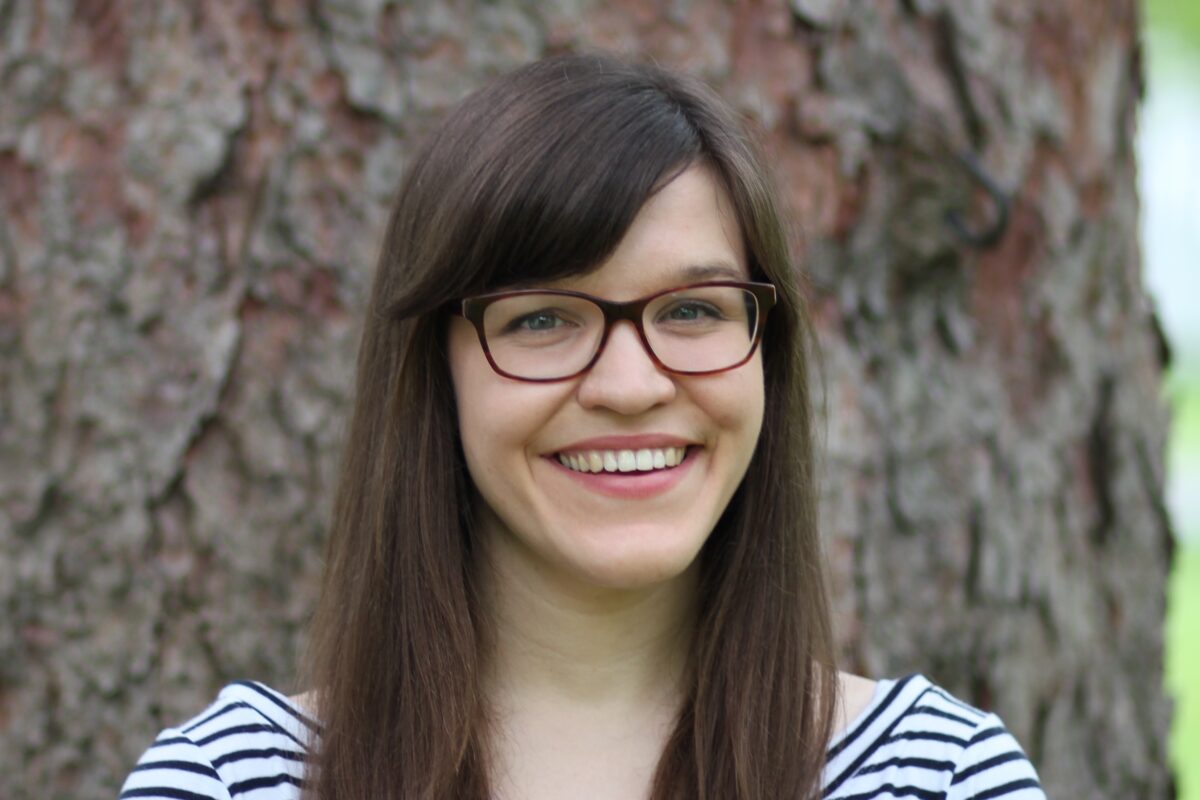
Carolyn Parkinson, Ph.D.

Research and Teaching Interests

I’m interested in how the human brain represents, navigates, and shapes its social environment. My research integrates theory and methods from social psychology with computational techniques that exploit the wealth of information contained in patterns of ties in real-world social networks and in distributed patterns of brain activity.

My current work is primarily concerned with better understanding the mental architecture involved in encoding the structure of our social networks, and the cognitive and behavioral consequences of this structure. By combining the systematic characterization of real-world social relationships with methods for assessing information processing within individual brains, this line of research aims to provide insight into interactions between social networks and human cognition.

A complementary line of research investigates the neural mechanisms that allow us to represent and mentally traverse different kinds of psychological distance from our current first-hand experience. For example, to what extent does understanding distance from oneself in space, time, and social ties rely on common neural computations? How do different kinds of psychological distance influence our responses to events in the world around us? How can our subjective perceptions of social, spatial, and temporal distance be warped by our emotions and motivations?

Research in the Computational Social Neuroscience Lab combines approaches from cognitive neuroscience, social network analysis, machine learning, and social psychology to address questions like these, and more broadly, to better understand the mental architecture involved in perceiving and navigating our social world.