

Posts classified under: TNT Faculty

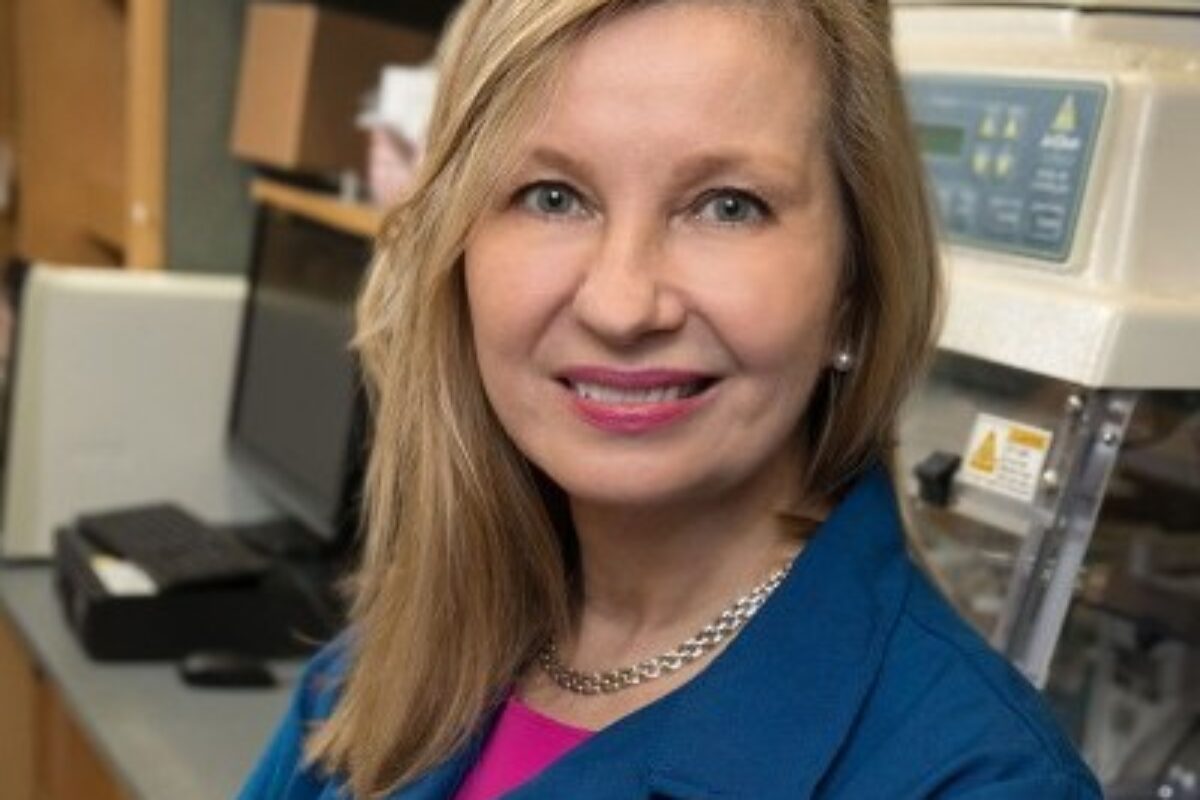
Kalyanam Shivkumar, Ph.D., M.D.

Dr. Shivkumar is a physician scientist and Distinguished Professor in the Departments of Medicine (Cardiology), Radiology at Bioengineering at UCLA. His field of specialization is interventional cardiac electrophysiology and his clinical interest is providing state of the art clinical care and developing several innovative therapies (e.g. epicardial ablation, neuromodulation) for the non-pharmacological management of cardiac arrhythmias and other cardiac interventions. Dr. Shivkumar’s research work relates to mechanisms of cardiac arrhythmias in humans especially the role of the autonomic nervous system and his research work transcends the perspective of a single organ and has implications for neurovisceral sciences in general. The UCLA Neurocardiology Research Program of Excellence was established by him as the specialized research arm of the Arrhythmia Center in 2014. Dr. Shivkumar and his colleagues are actively involved in human mechanistic studies, development of new intellectual property and medical technology for cardiovascular therapeutics. His IP has been incorporated into medical devices that are now FDA approved and in clinical use. He serves on the editorial board for several journals in cardiology and cardiac electrophysiology, and is a peer reviewer for several basic science and clinical journals. He also serves as a peer reviewer for the NIH in evaluating cardiac arrhythmia & neuroscience research. His research has been supported by grants from the American Heart Association, the Doris Duke Foundation, private donors and from the NIH (continuously since 2006). Dr. Shivkumar oversaw a 15-university NIH funded consortium investigating neural control of the heart. He currently leads an NIH Program Project Grant on cardiac arrhythmia mechanisms and leads a Leducq Foundation International consortium grant. Dr. Shivkumar has mentored several PhD candidates and has received several teaching awards. He served as the inaugural director of the UCLA Cardiac Arrhythmia Center & EP Programs ( from 2002-2025). He has been appointed to serve on the board of examiners for Clinical Cardiac Electrophysiology by the ABIM (American Board of Internal Medicine). He has been elected to the membership of the American Society of Clinical Investigation (ASCI) and serves as the institutional representative of UCLA for the ASCI. He was elected as an honorary Fellow of the Royal College of Physicians (London) in 2016 & President of the ISAN (International Society of Autonomic Neuroscience) in 2019. He was named as the Editor in Chief of the Journal of the American College of Cardiology: Clinical Electrophysiology in 2020. He was elected as a member of the Association of American Physicians (AAP) in 2022 and as a member of the Association of University Cardiologists in 2022. He founded the Amara-Yad Project, an open access knowledge portal for medical education.
https://www.uclahealth.org/medical-services/heart/arrhythmia/about-us/amara-yad-project

https://www.mcip.ucla.edu/indiv-faculty-page/?id=3385
http://www.neuroscience.ucla.edu/profile/shivkumar-kalyanam
https://www.youtube.com/watch?v=u6NKp2Rc7c8
http://arrhythmia.ucla.edu/
https://www.the-asci.org/controllers/asci/AsciProfileController.php?pid=…
http://www.ncbi.nlm.nih.gov/pubmed/?term=Shivkumar+K[Author]


Harold Monbouquette, Ph.D.

Harold Monbouquette, Ph.D., is a Professor of Chemical and Biomolecular Engineering. His group conducts research focused on sensors and diagnostics, as well as the application of nanotechnology to these areas. He has been instrumental in creating an implantable microprobe with neurochemical sensing sites that exhibit rapid response times (<100 msec) while retaining high selectivity, in incorporating multiple sensing modalities on the same probe, in developing a PDMS microstamping method to deposit enzyme to targeted microelectrode sites, and in fabricating an on-probe reference site that results in 60-70% reduction in sensor noise.

Nanthia Suthana, Ph.D.

Faculty Member

Associate Professor
Department of Psychiatry & Biobehavioral Sciences
Department of Neurosurgery
David Geffen School of Medicine
University of California, Los Angeles

Anne Andrews, Ph.D.

Faculty Member

Professor in Residence
Department of Psychiatry & Biobehavioral Sciences
David Geffen School of Medicine
University of California, Los Angeles


Neuroscience Research Building
635 Charles E. Young Dr S, Box 957332
Los Angeles, CA 90095


Biography

Dr. Andrews is Professor of Psychiatry at the University of California, Los Angeles. Dr. Andrews received her B.S. in Chemistry from the Pennsylvania State University and earned her Ph.D. in Chemistry as a U.S. Department of Education Fellow working at the National Institute of Mental Health, where she was later a postdoctoral fellow and senior staff fellow. At the NIMH, Andrews and her mentor, Dr. Dennis Murphy, discovered and characterized a novel serotonin neurotoxin, 2’-NH2-MPTP. Dr. Andrews was also instrumental in early studies on serotonin transporter-deficient mice. Andrews is a member of the Society for Neuroscience, American Chemical Society, and Society for Electroanalytical Chemistry. She has been the recipient of an NIH Fellows Award for Research Excellence, an Eli Lilly Outstanding Young Analytical Chemist Award, an American Parkinson’s Disease Association Research Award, and a Brain & Behavior Research Foundation (NARSAD) Independent Investigator Award. She is a fellow of the Collegium Internationale Neuropsychopharmacologicum and a Serotonin Club elected councilor. Recently, Dr. Andrews became Associate Editor for ACS Chemical Neuroscience.

­At UCLA, Andrews leads efforts in basic and translational research on anxiety and depression, and at the nexus of nanoscience and neuroscience. Andrews’ interdisciplinary research team of neuroscientists, biologists, chemists, and engineers focuses on understanding how the serotonin system and particularly, the serotonin transporter, modulate neurotransmission to influence complex behaviors including anxiety, mood, stress responsiveness, and learning and memory. Genetic and pharmacologic mouse models and human genetic variants are studied to understand the molecular basis of serotonin system function associated with the etiology and treatment of mood and anxiety disorders. Key proteins (e.g., brain-derived neurotrophic factor) and neuronal architectures regulated by serotonin are also investigated. Nanomaterials are designed for fundamental studies on neurotransmitter recognition by native and nonnative binding partners (aptamers) and for the development of in vivo nanobiosensors and functionally directed proteomics.