


Biography
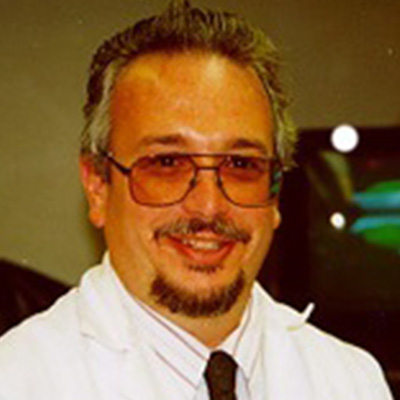
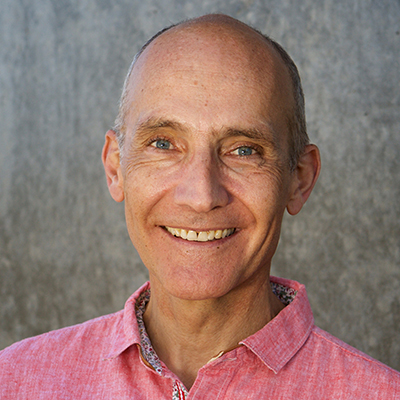
Felix E. Schweizer was born in Basel, Switzerland and conducted his graduate research in the laboratory of Prof. Max M. Burger under the direction of Dr. Theo Schafer. He received his PhD degree in biochemistry summa cum laude from the University of Basel in 1989. From 1990 to 1994, he was a post-doctoral fellow in the Department of Molecular and Cellular Physiology at Stanford University in the laboratory of Prof. Richard W. Tsien. From 1994 to 1998, he was postdoctoral fellow in the Department of Neurobiology at Duke University in the laboratory of Professor George J. Augustine. Dr. Schweizer joined the Department of Neurobiology in the David Geffen School of Medicine at UCLA in 1998 as Assistant Professor and was promoted to Full Professor in 2010. Dr. Schweizer’s research interests concern the molecular mechanisms by which neurons communicate, the regulation of communication by neurons and how alterations in neuronal communication might contribute to neuronal diseases. The Schweizer laboratory uses electrophysiological and optical tools to investigate the dynamic molecular mechanisms underlying the regulation of neurotransmitter release. We are particularly interested in the role of protein ubiquitination in regulating neuronal excitability and synaptic transmission. In collaboration with Dr. James Wohlschlegel, we used multiplexed SILAC and identified synaptic proteins that are dynamically regulated. More recently, in collaboration with Dr. David Krantz, we are using pesticides linked to neuro-degenerative disorders as unbiased tools identify novel pathways that might be involved in early signs of degeneration. In addition, we are characterizing transmission at the first synapse of the vestibular system, i.e. between utricular sensory hair cells and primary afferent neurons. In collaboration with Dr. Larry Hoffman we are finding that changing the gravitational load alters synaptic structures. We are now using serial EM and EM tomography in addition to physiology and cell biology to define in more detail the transfer function between head-movement input and afferent nerve-firing output.

Publications
A selected list of publications:
Lichtenberg Nina T, Thompson Andrew B, Iguchi Martin Y, Evans Christopher J, Romero-Calderón Rafael An Undergraduate Student-Led Neuroscience Outreach Program Shows Promise in Shifting Teen Attitudes About Drugs Mind, brain and education : the official journal of the International Mind, Brain, and Education Society, 2020; 14(4): 387-399.
Saravanapandian Vidya, Sparck Erin M, Cheng Karen Y, Yu Fei, Yaeger Courtney, Hu Terry, Suthana Nanthia, Romero-Calderón Rafael, Ghiani Cristina A, Evans Christopher J, Carpenter Ellen M, Ge Weihong Quantitative assessments reveal improved neuroscience engagement and learning through outreach Journal of neuroscience research, 2019; 97(9): 1153-1162.
Romero-Calderón Rafael, O’Hare Elizabeth D, Suthana Nanthia A, Scott-Van Zeeland Ashley A, Rizk-Jackson Angela, Attar Aida, Madsen Sarah K, Ghiani Cristina A, Evans Christopher J, Watson Joseph B Project brainstorm: using neuroscience to connect college students with local schools PLoS biology, 2012; 10(4): e1001310.
Brooks Elizabeth S, Greer Christina L, Romero-Calderón Rafael, Serway Christine N, Grygoruk Anna, Haimovitz Jasmine M, Nguyen Bac T, Najibi Rod, Tabone Christopher J, de Belle J Steven, Krantz David E A putative vesicular transporter expressed in Drosophila mushroom bodies that mediates sexual behavior may define a neurotransmitter system Neuron, 2011; 72(2): 316-29.
Fei Hao, Chow Dawnis M, Chen Audrey, Romero-Calderón Rafael, Ong Wei S, Ackerson Larry C, Maidment Nigel T, Simpson Julie H, Frye Mark A, Krantz David E Mutation of the Drosophila vesicular GABA transporter disrupts visual figure detection The Journal of experimental biology, 2010; 213(Pt 10): 1717-30.
Clark Ira E, Romero-Calderón Rafael, Olson John M, Jaworski Leslie, Lopatto David, Banerjee Utpal “Deconstructing” scientific research: a practical and scalable pedagogical tool to provide evidence-based science instruction PLoS biology, 2009; 7(12): e1000264.
Simon Anne F, Daniels Richard, Romero-Calderón Rafael, Grygoruk Anna, Chang Hui-Yun, Najibi Rod, Shamouelian David, Salazar Evelyn, Solomon Mordecai, Ackerson Larry C, Maidment Nigel T, Diantonio Aaron, Krantz David E Drosophila vesicular monoamine transporter mutants can adapt to reduced or eliminated vesicular stores of dopamine and serotonin Genetics, 2009; 181(2): 525-41.
Romero-Calderón Rafael, Uhlenbrock Guido, Borycz Jolanta, Simon Anne F, Grygoruk Anna, Yee Susan K, Shyer Amy, Ackerson Larry C, Maidment Nigel T, Meinertzhagen Ian A, Hovemann Bernhard T, Krantz David E A glial variant of the vesicular monoamine transporter is required to store histamine in the Drosophila visual system PLoS genetics, 2008; 4(11): e1000245.
Romero-Calderón Rafael, Shome Ratula M, Simon Anne F, Daniels Richard W, DiAntonio Aaron, Krantz David E A screen for neurotransmitter transporters expressed in the visual system of Drosophila melanogaster identifies three novel genes Developmental neurobiology, 2007; 67(5): 550-69.
Falcón-Pérez Juan M, Romero-Calderón Rafael, Brooks Elizabeth S, Krantz David E, Dell’Angelica Esteban C The Drosophila pigmentation gene pink (p) encodes a homologue of human Hermansky-Pudlak syndrome 5 (HPS5) Traffic (Copenhagen, Denmark), 2007; 8(2): 154-68.
Romero-Calderón Rafael, Krantz David E Transport of polyamines in Drosophila S2 cells: kinetics, pharmacology and dependence on the plasma membrane proton gradient The Biochemical journal, 2006; 393(Pt 2): 583-9.
Greer Christina L, Grygoruk Anna, Patton David E, Ley Brett, Romero-Calderón Rafael, Chang Hui-Yun, Houshyar Roozbeh, Bainton Roland J, Diantonio Aaron, Krantz David E A splice variant of the Drosophila vesicular monoamine transporter contains a conserved trafficking domain and functions in the storage of dopamine, serotonin, and octopamine Journal of neurobiology, 2005; 64(3): 239-58.