Biography
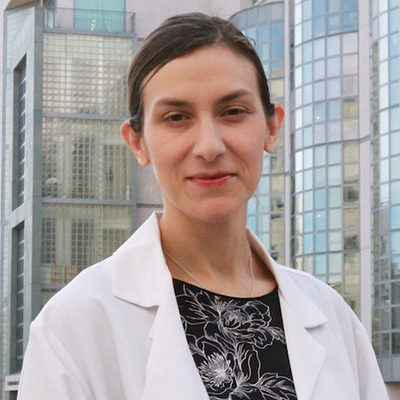
Dr. Shulamite Green is an Assistant Professor in the Department of Psychiatry and Biobehavioral Sciences at UCLA’s Semel Institute. Dr. Green received a Ph.D. in Clinical Psychology at UCLA in 2014. Thereafter, she completed a postdoctoral fellowship at the UCLA Ahmanson-Lovelace Brain Mapping Center with a focus on pediatric neuroimaging. Dr. Green is currently the director of the Sensory, Cognitive, and Affective Neurodevelopment (SCAN) lab. Dr. Green’s research integrates multiple neuroimaging techniques with behavioral and psychophysiological methodology to determine the biological mechanisms underlying clinical symptoms in a way that can be directly translated to creating interventions and improving quality of life. Much of Dr. Green’s current research is focused on the neurobiological bases of sensory over-responsivity, a common and impairing condition in which individuals over-react to sensory stimuli in their environments, causing challenges with participation in school, work, family life, and the community. Dr. Green conducted some of the first fMRI work demonstrating brain differences in children with autism spectrum disorders (ASD) specifically related to sensory over-responsivity, as well as identifying potential brain mechanisms through which some children with ASD regulate their sensory responses. She has continued to build on this work to identify how certain brain areas contribute to or regulate these difficulties and interfere with or facilitate attention and social functioning.
Dr. Green also has a strong interest in the impact of parenting and early caregiving adversity on development, with much of her early work focused on how parenting can confer resilience for children with developmental disabilities. Her current NIH-funded K08 career development award is focused on examining how common and distinct neural, behavioral, and clinical correlates of sensory over-responsivity in children adopted from foster care compared to those with autism.
In addition to the K08 award, Dr. Green’s work has been funded by multiple NIH grants, including a recent R01 from NIMH to study the development of sensory regulation across childhood and adolescence, and has been published in prominent scientific journals including JAMA Psychiatry , the American Journal of Psychiatry , the Journal of Child Psychology and Psychiatry, and Translational Psychiatry . Dr. Green is also the recipient of a dissertation award from the International Society for Autism Research as well as a Brain and Behavioral Research Institute Young Investigator Award.
Dr. Green is passionate about mentoring as well as promoting justice, equity, diversity, and inclusion (JEDI) in her lab, the department, and academia in general. She co-leads the teaching and mentoring JEDI group for the Center for Autism Research and Treatment (CART), and holds monthly JEDI meetings in her lab.
Clinically, Dr. Green serves as the autism specialist for UCLA TIES for Families, a program that provides extensive inter-disciplinary services for families adopting children from foster care. Dr. Green conducts autism evaluations and consultations for therapists working with families in this program.
View a up-to-date publication list: NCBI